Minutes before my family of four piled into the taxi to drive to the airport, my mom came up from the basement holding a long, black graduation gown. "Take this for the airport!" she said. In that second, I saw the graduation gown as something I had never considered before – it was the perfect abaya! When the abaya I ordered online failed to arrive in time for our trip, I was resigned to showing up without proper attire. But my mom had solved the problem with a good ole high school and university tradition.
What is an abaya, you ask? It is the obligatory black cloak that women wear in Saudi Arabia. Even foreigners must wear it whenever in public in a mixed-gender environment. As the keeper of the holy sites of Islam - Mecca and Medina - Saudi Arabia follows one of the most conservative interpretations of the religion. While in most Muslim countries, wearing the abaya is a choice, in Saudi Arabia it is required and it must be black. I needed one because Josh and I accepted offers to teach English to incoming students at King Saud University in Riyadh about two months ago, and since then life has been a whirlwind of compiling needed documents, applying for visas, packing, and researching everything we could about Saudi Arabia.
 Why Saudi Arabia?
 We applied to numerous ESL jobs in many countries; we sent applications to the KSA (Kingdom of Saudi Arabia – they often refer to it simply as "the Kingdom") just to feel it out but not expecting anything. When we received a response, we jumped at the chance to go to a country that is not easy for foreigners to enter. Regular tourist visas to visit the Kingdom don't exist. What we wanted was a new country, a new language, and a new culture. KSA gives us all of that plus a drastically different way of life and an inside look at an area filled with misconceptioins and stereotypes on both sides. More than being nervous or worried, we were filled with a great curiosity about life there. We are also very excited to dig into learning Arabic, and heartened at the prospect of paying off student loans in the process.
The Flight
Our flight was a harrowing 30-hour ordeal from Minneapolis to Chicago to Frankfurt to Riyadh. Misha did wonderfully well on the planes – he could barely contain his excitement looking out the window at take-off and informing me that those little moving things below were cars, he watched movies, he played with his toys, and he even slept the entire ride over the ocean. Sebastian didn't fare so well. He caught a cold and was miserable most of the way. You know how sometimes after a long ride, people will comment afterward that your baby did so well considering the length of the flight? Nobody said that this time.
ArrivingAs we have learned throughout the visa process, Saudi Arabian business looks very professional on the outside, but in truth it is fraught with miscommunication and inefficiency. So we were a tiny bit nervous that they would forget to pick us up at the airport. We were also concerned that we may have inadvertently brought something into the country that we weren't supposed to. We have read about a multitude of things being taken away from incoming passengers, from stuffed toys and statues to Bibles and Christmas decorations and religious or polical books. Other banned items include alchohol, drugs, pornography (which is very loosely defined, including lingerie ads) and all pork products.
We needn't have worried. We walked into the airport and descended the escalator to see a huge, spouting fountain flanked by little gardens, smaller bubbling fountains, and cascading waterfalls. The lines of foreigners at customs was disheartening, but then we were whisked to the family line and swept right along. They didn't give our bags a second glance – they simply ran them through the routine x-ray with much less diligence than the Minneapolis airport and sent us on our way. We easily found a Nepali driver waiting for us, holding a sign with our names on it. He loaded up our bags and delivered us to a hotel, where we are staying until they can find us an apartment.
 Sebastian helps me unpack.
We arrived in Riyadh about 9 p.m. Tuesday night, completely exhausted. When we stepped out of the airport doors, we reveled in the comfortable night air and the slight breeze. A large white mosque shone in the distance. Saudi men wearing white thobes and checked head cloths smiled at the kids. Misha noticed immediately the Saudi attire, as we have been reading lots of library books about the area lately. He knows all about the geography, animal life, and clothes. He's also anticipating learning Arabic, and before we went he told me he wasn't ready because he didn't know the language yet. "I don't even know how to say mommy and daddy in Arabic!" he said with concern, but I assured him we would learn when we got there.
Since the only people in the customs line were foreigners like ourselves, I didn't bother putting on my makeshift abaya. I was wearing only my western clothes (none too revealing, don't worry – just my typical airport attire of a sweatshirt and jeans!) and I didn't receive any negative attention.
 Done with airports and relaxing in the hotel!
Our driver, who works for the company that hires English teachers, and the hotel staff made us as comfortable as possible – they gave us a cash advance on our first month's salary, supplied us with Sim cards (prepaid minutes) for our cell phones, stocked our fridge with milk, chocolate milk, water, and two Near Beers (most amusing) and even brought us a stack of menus from nearby restaurants and brought back whatever food we desired. The warm welcome was a great end to a very long day of travel.
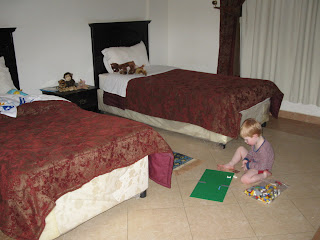 Our hotel is a suite of sorts. It has two bedrooms, two bathrooms, a kitchen with a small stove and fridge, and a living room. Misha moved right into his room and set up his toys.
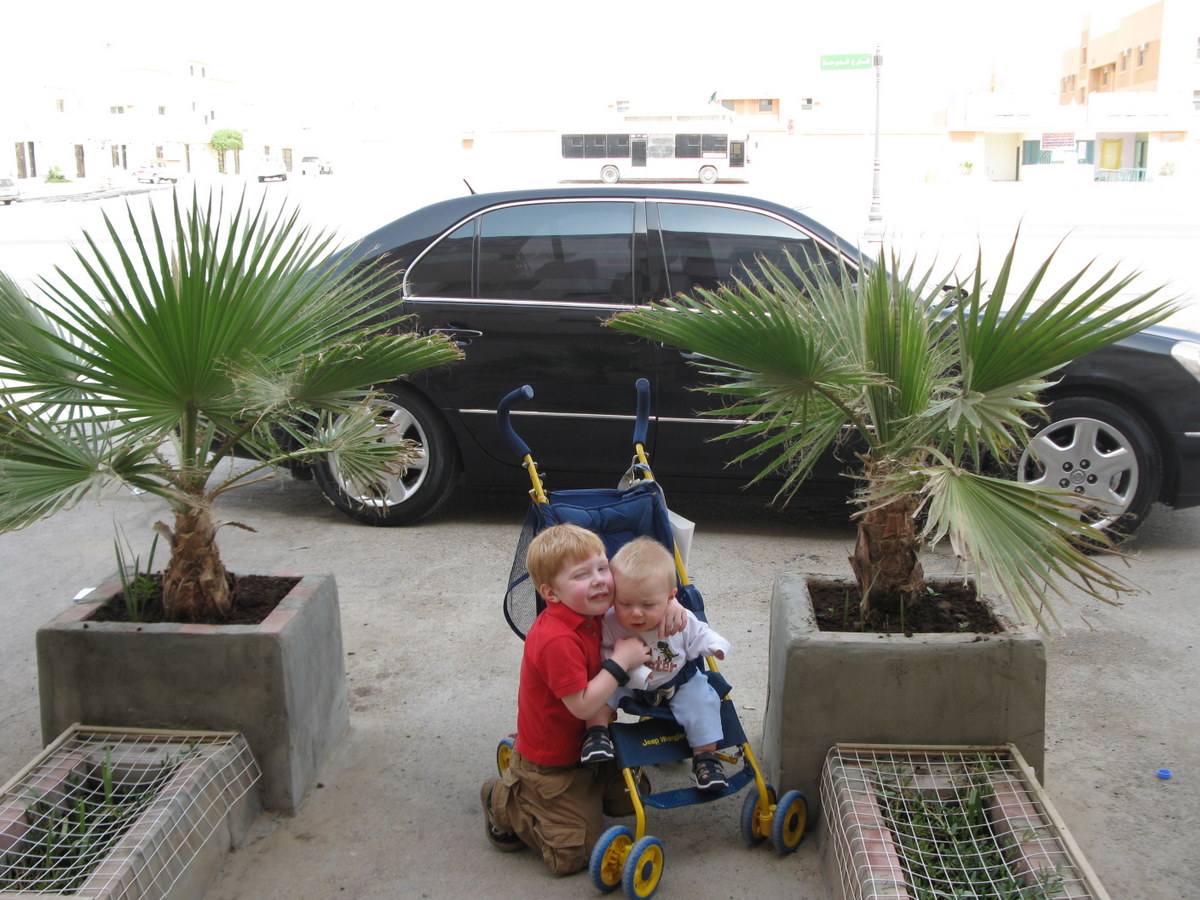
 By the palms in front of the hotel.The Call to Prayer
Extreme jet-lag prevented us from sleeping, and I was still awake trying to rock Sebastian back to sleep at 5 a.m. when I heard my first Call to Prayer in Saudi Arabia. The sound is hauntingly beautiful, though detracting from its religious feel is the poor quality of the speakers and the mishmash of various mosques broadcasting off-sync from one another. And like most foreigners, we would probably find it more beautiful at 7 a.m. Instead of 5 a.m! The sound is quite loud, although from talking with other teachers here, the Call to Prayer is far less defeaning at this location than other hotels closer to mosques. Muslims pray five times a day, so the Call to Prayer is something we will hear quite a bit. Prayer time lasts about 20-30 minutes each time, and businesses shut down for the duration.
The evening Call to Prayer, and the view out of our hotel window:
The Saudi Way?The next morning was a bit of a shock to our system, when our driver called saying he was to take us to the school at 8 a.m. Josh went to meet the director while I stayed with the kids. Josh's conversation with the director was disappointing and comical at the same time – it turns out that the company that hires the English teachers had been hiring teachers despite the fact that the university had no more positions open! But not to worry, we already have contracts and we are already getting paid – it is just a matter of assigning us to a different post. As Josh says, we are on a paid vacation until they figure out where to employ us. I was really looking forward to teaching women at the university, so I hope things will still work out well. We find it extremely ironic that it is impossible to get a visa for Saudi Arabia without a JOB to sponsor us, but when we arrived, there was no job! Only in Saudi Arabia. From the sound of things, this sort of thing happens all the time.
The MallWednesday night, after a groggy day of trying to rest, we finally worked up the energy to go out. I donned my graduation gown and we took Misha and Sebastian to the Granada Mall, which is only two blocks from our hotel. And what a mall!
 You can see the different styles of dress of Saudi men, Saudi women, foreigners and children.
Palm trees, escalators, glass elevators, a food court, a mini amusement park, and stores galore. Fancy dress shops, gold shops, and popular European and American chains like Etam, Claire's, Payless, and Justice beckon the shoppers. The hallways are filled with Starbucks, Krispy Kreme, and Haagendaaz. The international variety is incredible. And despite what one would naturally assume, Saudi women love fashion. Underneath their abayas, Saudi women wear the latest designs from all over the world. I enjoyed sounding out Arabic names of stores. Most stores have signs in both English and Arabic.

 Strikingly American, it seems out of place.
Misha loved the mall. And everyone loved the kids. Men and women, Saudis and foreigners - all loved to pinch Sebastian's cheeks and smile at Misha. The mall is the place for families: the Saudi father clad in white, the Saudi mother shrouded in black, and the kids in the most western-style outfits you can imagine. Wednesday night is the equivalent of our Friday night, since the weekend here is Thursday and Friday (Friday is the Islamic day of rest), and we discovered that the mall is open past midnight with families and children taking full advantage of it! They say the Saudis do two things for entertainment – eat and shop – and it looks like that is the case.
 I really like this picture of Misha drinking his freshly-squeezed orange juice in the food court, with groups of Saudis behind him in the traditional thobes and checked head coverings.
 Apparently the abaya is no deterrent to wanting to have nice clothes.
 The Yummy Cookie. This made me laugh.
 Yes, Claire's in Saudi Arabia.
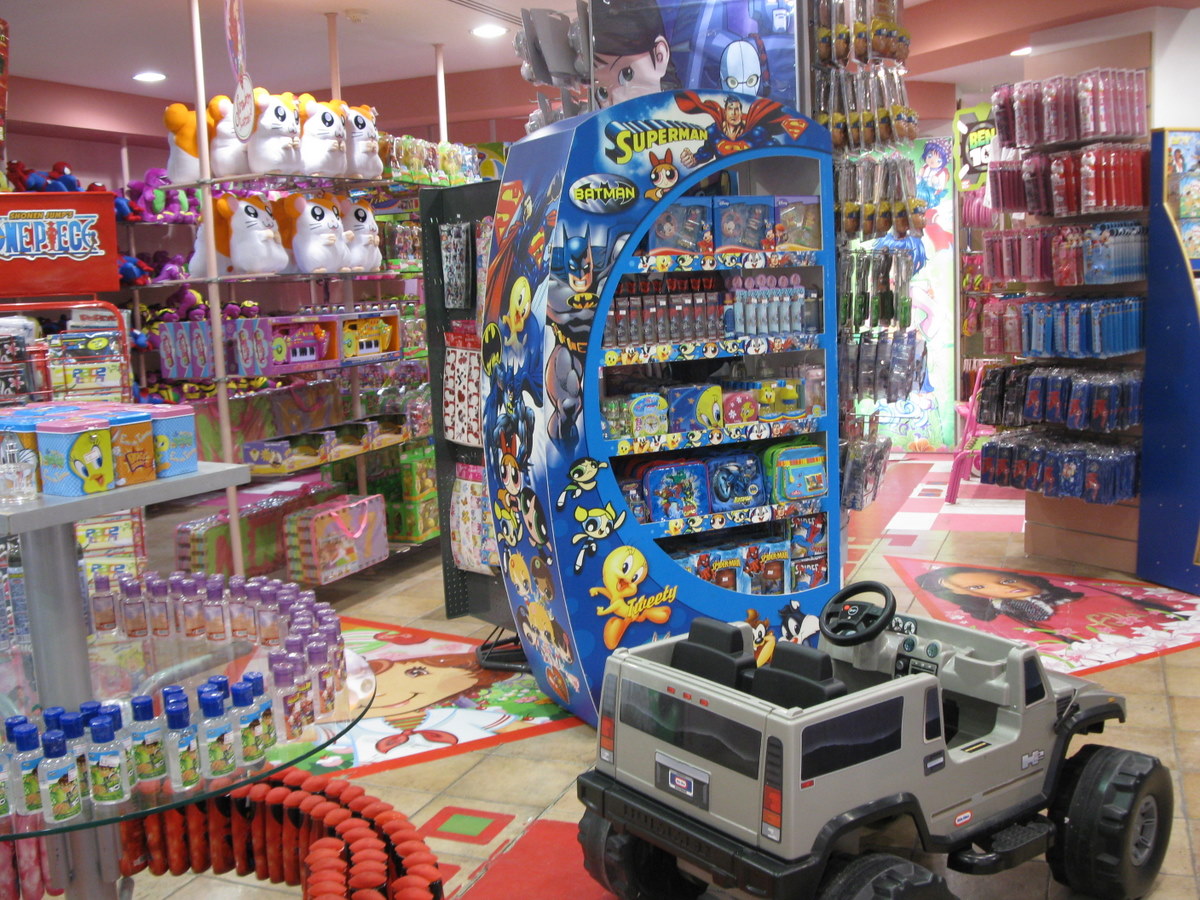
 Batmobile in the toy store! They have very Western toys here, anything you can think of. Leapfrog Tag books, Barbie dolls, Legos, talking ABC toys in English and Arabic, etc.
 Toys, toys, toys.
 Sebastian in Carrefour, the big superstore attached to the mall.
I bought an abaya and head scarf immediately, then went to the bathroom to put it on. I had no idea how to put on the head scarf (despite watching how-to videos on youtube), so when a woman commented that my scarf was beautiful, I asked her if she could show me how to wear it. She happily obliged, deftly wrapping it around my head and tucking it under my chin. Unfortunately, after a bit of walking around, it slipped off and I was unable to reassemble her handiwork, but in the end it turned out not to be a big deal.
Dress CodeThere are several styles of dress that I observed in the mall. Most women are shrouded completely in black from head to toe, covering their hair and face as well. Some veils reveal only the eyes, while others show not even that much – the women simply look out through a sheer gauzy black material that prevents others from seeing in. As with everything we have seen so far, Saudi Arabia is unexpectedly normal in some areas and outright bizarre in other areas. It is hard to get used to seeing all the women as such stark black figures. The contrast between tradition and modernity is everywhere. As a classic example, I saw more than one completely-veiled woman holding her cell phone close to her face to read the screen. But not all women cover their faces – it is not required, but simply the norm. There are also some women who wear only the abaya but do not cover their hair, especially foreigners. I walked around without my scarf and had no problems. I suspect though that there may be times when I will want to wear it, so I keep it with me. And actually, last night, I managed to wrap my scarf myself so that it looked pretty good!
 In my abaya (cloak) and hijab (head scarf). Many women have beautifully embroidered abayas and scarves.
The women don't look encumbered like I expected them too – instead they look graceful, gliding along in their smooth drapes of black. I myself feel a little bit graceful when wearing it – that is, until I step on the bottom of it, pop a snap open while bending to pick up Sebastian, or catch my sleeves on door knobs, stroller handles, and even Sebastian's feet. And then there's the problem of getting the sleeves wet when washing my hands. To say nothing of changing a dirty diaper with sleeves that hang to my bellybutton! Luckily the mall is air conditioned, but nevertheless, the abaya is warm. Walking in the sun is awful – and it's only March! Highs now are about 90 degrees F, with lows in the 60s. It's nice that it cools off in the evenings.

The Saudi men wear floor-length white robes called thobes, with a checkered or plain white head covering called a gutra. This traditional outfit sets them apart from all the non-Saudis. The KSA is filled with foreigners – one stat I read said one in five people is non-Saudi. In fact, most of our contact with people is with store employees from India, Pakistan, Nepal, Egypt, etc. Since they have the money, Saudis have no desire to do manual labor or jobs like teaching and nursing, so they import all their labor. Just what the Saudis themselves do, I'm not quite sure. Foreigners tend to dress in nice clothes, suits and ties or at least a button-down shirt.
Gender IssuesI felt a little silly taking pictures of the bathroom signs, but in the end, I figured it was worth it. It's interesting because both the male and the female image have the heads covered and they don't appear as distinct, especially from afar, as our typical American signs of a man in pants and a woman in a dress.


Everything in KSA is segregated by gender. In restaurants, there is a section for single men and a section for families or women only. Even to pay for food at the food court in the mall, there were two lines to order (which I didn't notice at first!). Mingling of single men and women is strictly prohibited. A man can not meet with another woman unless he is related to her, and vice versa. Single men can't even enter the mall on weekends. That being said, married couples and families have the easiest time in Saudi Arabia. As a couple, Josh and I can go places together and attend anything for families. Saudis are an extremely family-oriented people. Having two children this time around has obviously made the transition to a new country challenging in many ways, but in other ways, having Misha and Sebastian gives us a real "in" to the culture. Since there are no bars, clubs, or cinemas in the Kingdom, most of the entertainment centers on doing family activities. There is ice skating, amusement parks, the zoo, bowling, etc. It is easy to tell that everyone here cherishes children. I watched with a smile as a Saudi father went on a spinning ride with several of his young children. Each spinning pod that went by was filled with another father and more children. I even saw some women on the rides, so I plan to take a turn myself. Josh took Misha for a few rides yesterday, and Misha loved every second of it!
It is somewhat awkward not knowing what I should or should not do here. Whenever I leave my hotel room, I have to put on the abaya. It's not a huge inconvenience, but it is a deterrent from running out to the front desk to buy a chocolate milk for Misha. Perhaps I shouldn't smile or talk to the hotel staff, but then again, they are not Saudi nationals. They were not brought up in the Saudi tradition of keeping any contact with females to a bare minimum. Josh and I both have had to work hard at not looking members of the opposite sex in the eye – this is hard to do because Americans are trained to do exactly that. And we also have to remember not to show any affection in public, not even holding hands. Women face other restrictions as well. For example, they can not play sports, ride bikes, or drive. Judging by the way Saudis drive, I may not miss that privilege too much. Everyone confirms vehemently that the Saudis are crazy drivers – even the Indians say so! Our first night in our hotel room was punctuated every few minutes with squealing tires loud enough to rival a movie sound effect as drivers took the curve at breakneck speed, and it has continued since, although I have stopped noticing it so much now. Come to think of it, driving in Saudi Arabia may be dramatically improved if women were allowed to drive. :)
IslamIslam is very pervasive in daily life. Prayer times dictate schedules, as we noticed while shopping in the mall. When it's prayer time, all the stores in the mall finish serving customers and shut their gates until prayer is over. The exception is the large Carrefour (like a Wal-Mart), which does not shut down, but customers can not buy items during prayer time. We have an iPod app telling us the daily prayer schedule so we can know when things will shut down. (Shopping in Saudi Arabia and not sure when prayer will start? There's an app for that!) The odd thing is that despite all the time dedicated to prayer, we have seen hardly anyone praying. Many people simply continue milling around the mall waiting for shops to open up again.
Afternoon Call to Prayer in Carrefour:
ArabicWe feel like there is so much we haven't done yet and so much Arabic we haven't learned yet, and then we remind ourselves that this is only our third day here. Today is Friday, so everything is closed. We took a walk and chatted with the hotel staff about useful Arabic phrases. We are already learning lots of food words. In the grocery store, some items have both languages, while others are only Arabic or only English. We can see already that it will be very worthwhile to learn Arabic, as many people speak very limited English. A good incentive for us to learn!
 Food
FoodWe have really been enjoying the Middle Eastern food - lamb kebab, chicken, rice, flat bread, hummus, baklava, and juice. Saudis may not indulge in alcohol, but they do love their juices. Restaurants offer fresh-squeezed juice of all types - orange, mango, carrot, and avocado just to name a few - made on the spot and served to you.

This is the most amazing orange juicer. When you order a freshly-squeezed orange juice, they turn on the machine so that oranges slide into it and are sliced in half, then the machine proceeds to squeeze six halves at once. Where can I get one of these? Again, I felt silly taking the picture - but the employees just thought it was funny.
 It's easy to have food delivered to our hotel.
Kebab - grilled lamb, chicken, and beef.

Hummus and flatbread. So much better than the hummus in the States!
 Naturally we've been indulging in baklava... We haven't had baklava this good since Kyrgyzstan.
 "Jet-Lag Josh" fell fast asleep mid-laptop-session. Our schedules have been horribly out of whack, with the added fun of the kids being on different schedules than ours!
 As we women teachers get ready to leave the university at the end of the day, we all put on our abayas and head scarves, as dictated by the dress code. (The full face veil worn by my friend on the left is not required for us but it is worn by all of the students. Just so you know, she doesn't typically wear her niqab; she wanted a more dramatic photo!) Normally, I don't wear the head scarf when I'm out shopping or walking, but since it's university policy, I do wear it each morning for about 4 seconds as I walk from the taxi to the university gate, at which point I disappear behind portable wooden walls that are staggered so as to hide the women the instant they enter the building. There are a few men guards who sit outside the gate. At times, they have to pass a note to the inside. They then stand by the gate, and a (covered) woman collects the note to take into the secretive world within, a world the guards can never know.